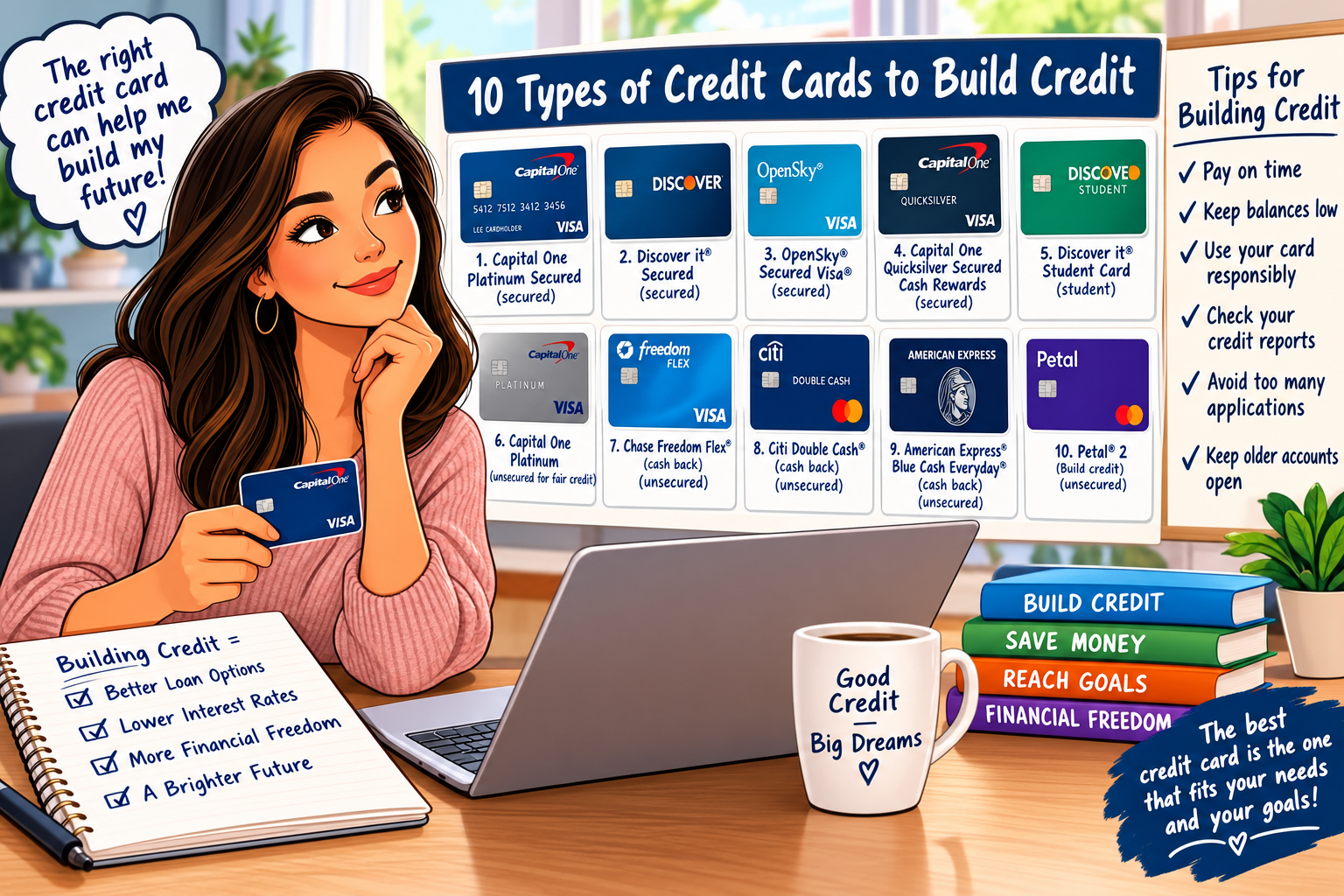
When you’re working on building credit, the correct credit card can make a huge difference. Your credit history—whether you have no credit, limited credit, fair credit, or bad credit—determines the best credit card for building credit. Secured credit cards, student cards, and some unsecured cards are excellent choices.
The most important thing to remember is not just to get a credit card but to use it wisely. Paying on time, keeping a low credit utilization, and maintaining a history of account management can help build a solid credit history.
Here are 10 types of credit cards to consider for building credit, along with examples of cards available in 2026.
Secured Credit Cards
A secured credit card is one of the most prevalent options for those with poor or damaged credit. Usually, you give a refundable security deposit to help secure the credit line. The card then functions much like a regular credit card.
Secured credit cards include the Capital One Platinum Secured Credit Card, Discover it® Secured, and OpenSky® Secured Visa®.
Capital One Platinum Secured Card
The Capital One Platinum Secured is a viable option if you’re looking to develop (or rebuild) credit. Capital One currently has a $0 annual charge and refundable minimum deposits of $49, $99, or $200, depending on approval requirements. Capital One also reports the account to all three of the main credit agencies.
Discover it, Secured Card.
For consumers who want a secured credit card to develop credit, the Discover it® Secured is another option. Secured cards can be helpful in building credit, Discover says, if the issuer reports the account activity to the credit agencies.
OpenSky® Secured Visa® Card
Another secured card to consider is the OpenSky® Secured Visa®. OpenSky’s regular Secured Visa has a $200 minimum deposit; however, additional OpenSky secured products have variable deposits and costs.
Capital One Quicksilver Secured Cash Rewards Credit Card
Want to build credit and receive cash back at the same time? The Capital One Quicksilver Secured Cash Rewards card may be worth considering. It’s one of Experian’s 2026 credit cards for developing credit.
Student Credit Card
If you’re a college student and don’t have much of a credit history, a student credit card may be worth it. Student cards are meant for those who are just starting out building credit and can be a beneficial way to start building a strong payment history.
Credit Cards for Fair Credit Unsecured
If you have fair credit, you may not require secured credit cards. Some unsecured cards don’t require a security deposit. Capital One, for example, says its Platinum card is an unsecured card for customers with fair credit.
Credit cards that offer cash back can help you build credit.
With a cash-back credit card, you can build credit and earn incentives. But rewards should not lure you into spending above your means to pay them back. Experian presently provides numerous cash-back cards as opportunities for building credit.
Credit Cards Without Annual Fees
When you’re building credit, you want to avoid unnecessary expenses. Search for cards with no annual charge, but also check the APR, late-payment policies, deposit requirements, and other costs before applying. When you’re comparing secured cards, Experian recommends you carefully look at costs.
Credit cards that report to all three credit agencies are important to consider.
Before you even apply for a credit card to establish credit, one of the most crucial things to check is whether the issuer reports your account activity to Experian, Equifax, and TransUnion. That’s because you may see your responsible account activity on your credit reports.
Cards That May Be Upgraded
Some secured cards also allow users the ability to move up to an unsecured card at some point in the future once they prove they know how to handle credit responsibly. For example, Capital One says that by responsibly using its Platinum Secured card, a cardholder may be able to recoup the deposit and qualify for an unsecured Platinum card.
How to Build Credit Using a Credit Card
Obtaining the card is just the beginning. If you want to develop credit using a credit card, consider the following habits:
Pay yourself first. Pay every bill on time.
Try to pay off the entire statement debt each month.
Keep your credit use on the low side.
“Because you have credit available doesn’t mean you should use it.
Please review your credit reports for any inaccuracies.
Don’t apply for a bunch of credit cards at once.
Keep open older accounts where acceptable and where expenditures are not generating additional charges.
A secured credit card can be a way to improve credit, but only if the issuer reports the account activity to a credit bureau and you use the card properly.
Conclusion
If you’re looking for the best credit card to establish credit, no single credit card is right for everyone. Your first credit profile counts. If you have no credit, you might want to consider a secured credit card or a student credit card, while if you have fair credit, you may be able to get an unsecured credit card.
Before you apply, compare the annual fee, security deposit, APR, credit limit, rewards, credit bureau reporting, and upgrade possibilities. Most importantly, utilize the card as a credit-building instrument, not extra money to spend.
Credit card terms and conditions, APR, fees, and approval requirements may change. Please review the issuer’s latest terms before submitting your application.